
Beyond the Basic Chatbot
For years, website chatbots were limited to rigid decision trees. They answered basic FAQs based on exact keyword matches, often leaving users frustrated when their specific question fell outside pre-written scripts.
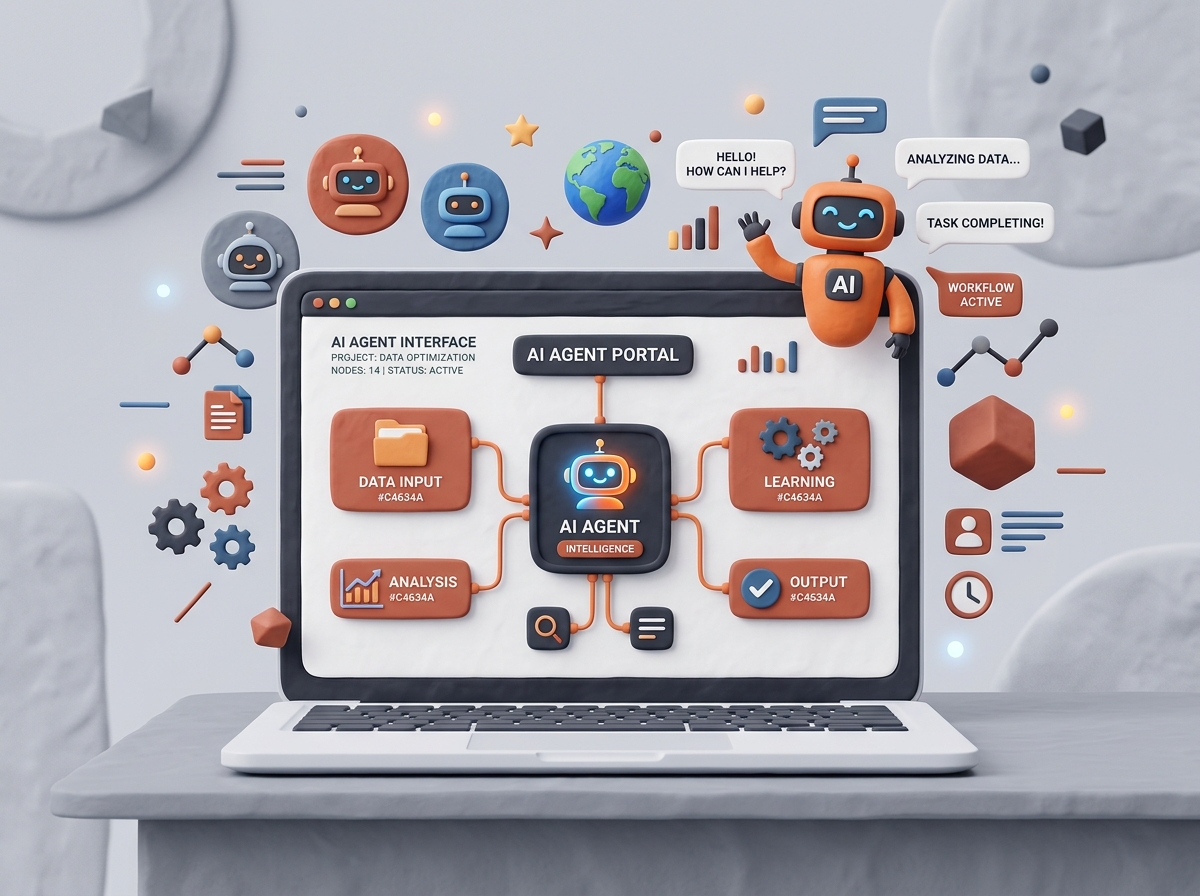
In 2026, website AI has evolved from static chatbots into autonomous AI agents.
Instead of relying on rigid rules, AI agents understand context, process natural language intent, interact with backend APIs, and perform real actions to assist visitors in real time.
What AI Agents Actually Do on Modern Websites
An AI agent does not just talk — it works. Here are practical examples of what AI agents handle on business websites today:
1. Smart Lead Qualification & Requirement Scoping
When a prospect lands on your site, an AI agent can engage them in a natural conversation to understand their exact needs, project scope, budget range, and timeline.
Rather than filling out a static 10-field form, visitors share details naturally while the agent structures the lead information for your sales team.
2. Automated Task Execution & Self-Service
Modern AI agents can perform authorized actions directly:
- Scheduling consultations synced with live calendar availability
- Querying inventory or service availability from live databases
- Generating dynamic cost estimates based on user parameters
- Creating support tickets directly inside internal CRM systems
3. Contextual Knowledge Base Handoff
By connecting an AI agent to your company documentation, product catalogs, or technical knowledge base, the agent provides instant, accurate answers derived from your actual business data — not generic internet summaries.
Why This Matters for Small Businesses Specifically
Leveling the Customer Service Playing Field
Small and medium-sized businesses rarely have the resources to staff 24/7 live support teams. An AI agent acts as a first responder that never sleeps, ensuring inquiries receive immediate, intelligent responses at 2 AM or on weekends.
Reducing Friction at Decision Moments
Prospects often bounce off a website when they cannot find a quick answer to a specific question. An AI agent resolves uncertainty in real time, guiding visitors toward booking a call or requesting a quote before they leave for a competitor.
Freeing Core Teams for High-Value Work
When routine inquiries, initial qualification, and common troubleshooting steps are handled autonomously, business owners and senior staff can focus on strategy, fulfillment, and building high-touch client relationships.
Key Implementation Considerations
Deploying an AI agent requires careful architecture:
- Clear Data Boundaries — Ensure the agent only accesses authorized public data and secure endpoints.
- Graceful Human Handoff — When an inquiry requires human judgment, the agent should seamlessly route the conversation to your team with full context.
- Integration with Existing Tools — The highest ROI comes when the agent connects directly into your existing CRM, database, or booking platforms.
Looking Ahead
In 2026, web-embedded AI agents are transitioning from optional experiments into foundational operational infrastructure.
If you are exploring how intelligent workflows can automate inquiries and streamline customer interactions on your website, our team at FlatOrbit designs custom AI Automation & Integration solutions tailored to your exact business requirements.
Author
Vinayak
Founder of FlatOrbit. Full-stack developer passionate about building products that solve real problems.
Learn more about Vinayak