
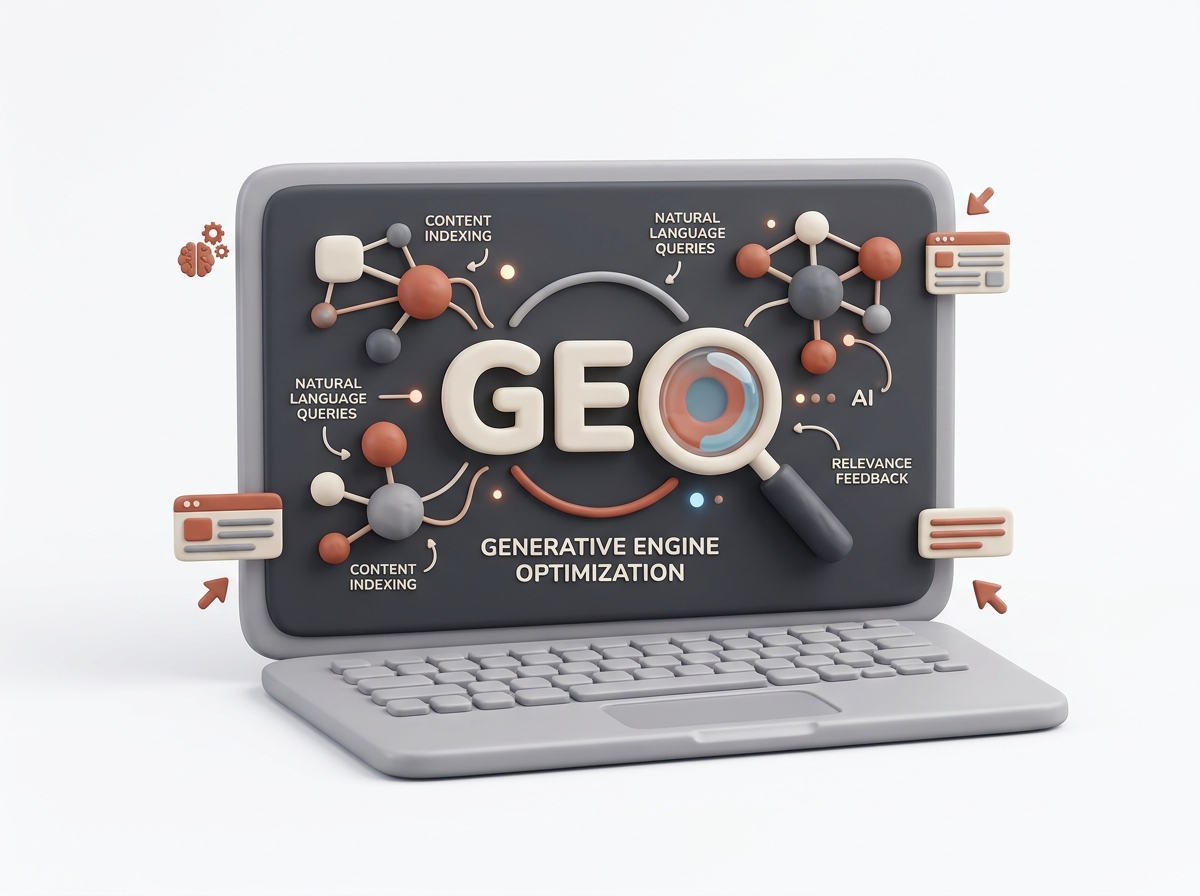
The Shift from Links to Direct Answers
For over two decades, search engine optimization (SEO) focused on one main goal: ranking on page one of Google for specific keywords. Success meant optimizing title tags, earning backlinks, and competing for ten blue links.
Today, search behavior is undergoing its biggest transformation since the launch of Google. Millions of users now turn to AI search tools and engines like ChatGPT, Perplexity, Claude, and Google Gemini to find answers.
Instead of clicking through multiple search results, users receive synthesized direct answers.
This shift has given rise to GEO — Generative Engine Optimization.
How Generative AI Search Differs from Traditional Search
Understanding GEO requires understanding how AI search systems process information differently than traditional search crawlers:
| Feature | Traditional SEO | Generative Engine Optimization (GEO) |
|---|---|---|
| User Query | Short keywords ("best software agency Pune") | Natural conversational prompts ("Which studio builds custom Next.js dashboards in India?") |
| Search Output | List of ranked links | Synthesized text summary with source citations |
| Core Metric | Click-through rate (CTR) & organic rank | Citation frequency & AI recommendation share |
| Evaluation Factor | Keywords & domain backlink authority | Contextual relevance, factual clarity, & structured data |
Why SMBs Should Start Caring About GEO Now
Generative engines favor clear, highly specific domain authority over generic keyword-stuffed articles. This presents a unique advantage for small and medium businesses.
You do not need an enterprise marketing budget to win in AI search. You need authoritative, clear, and structured content that AI models can easily parse, verify, and cite as a trusted source.
Early adopters who establish a structured digital footprint today will capture outsized visibility as AI-assisted search becomes the primary discovery channel.
Practical First Steps for GEO Optimization
1. Implement Schema & Structured Data
AI engines rely heavily on machine-readable microdata to understand entities and relationships. Ensure your website implements comprehensive JSON-LD structured data for:
- Organization & Local Business details
- Service descriptions & pricing starting points
- Product catalogs & FAQs
- Case studies & client reviews
2. Structure Content around Declarative Answers
AI models extract information cleanly when content uses clear headings followed by direct, factual answers. Use clear subheadings (`##` and `###`) and concise introductory summaries for key topics.
3. Build Citation & Review Authority
AI search tools cross-reference information across multiple authoritative sources to verify credibility. Ensure your business details, case studies, and customer testimonials are consistently published across reputable industry platforms, GitHub, directories, and review channels.
4. Maintain Consistent Brand & Service Information
Inconsistencies in your service descriptions or business address across external platforms can confuse AI knowledge graphs. Keep entity details uniform across your website, Google Business Profile, and professional listings.
Conclusion
GEO does not replace traditional SEO — it builds upon it. Having a fast, accessible, mobile-first website with clean code remains the essential foundation for winning visibility across both traditional search engines and modern generative search platforms.
Author
Vinayak
Founder of FlatOrbit. Full-stack developer passionate about building products that solve real problems.
Learn more about Vinayak