
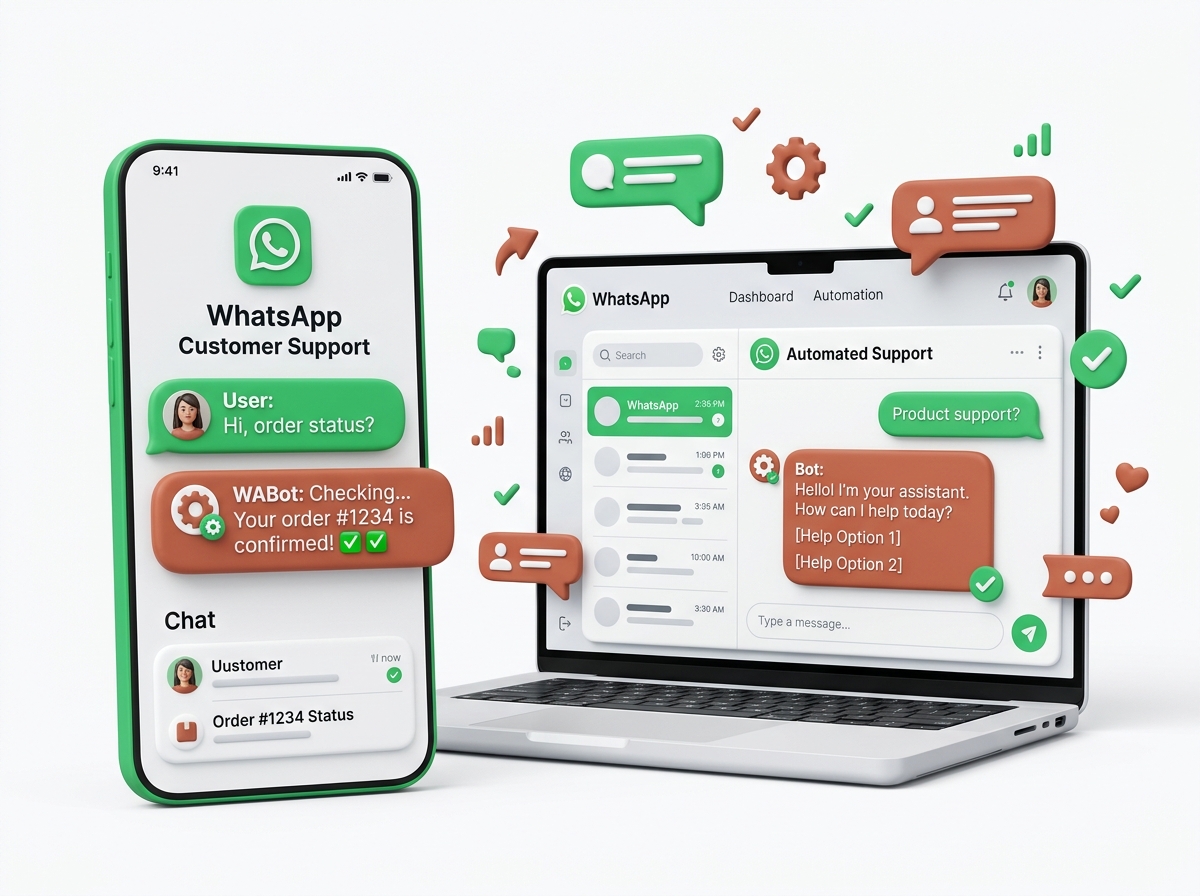
The Default Business Channel in India
In India, WhatsApp is far more than a messaging app — it is the primary interface through which consumers interact with businesses, request quotes, check order statuses, and seek customer support.
With high daily usage across all demographics, customers expect instant communication. However, managing incoming business WhatsApp chats manually on individual phones quickly creates operational bottlenecks:
- Inquiries get missed during busy hours or weekends
- Customer support responses depend on individual staff availability
- Data remains trapped inside personal chat histories instead of structured databases
WhatsApp automation bridges this gap by connecting messaging workflows directly into intelligent business systems.
What WhatsApp Automation Actually Solves
Automating core customer messaging solves tangible operational challenges for growing business owners:
1. Instant Lead Greeting & Initial Triage
When a prospect reaches out on WhatsApp, an automated workflow greets them instantly, provides basic service details, and collects their specific inquiry parameters — ensuring leads never go cold.
2. Interactive Product & Service Browsing
Using official WhatsApp Business API features, businesses can present interactive menu lists, service option buttons, and product catalogs directly within the chat interface, guiding users seamlessly toward booking or purchasing.
3. Automated Order & Booking Notifications
Rather than sending manual updates, automated systems dispatch instant transactional notifications for:
- Order confirmations and delivery tracking links
- Appointment bookings and automated calendar reminders
- Payment receipts and service status updates
Practical Use Cases Across SMB Sectors
- Service Agencies & Consultants — Automated consultation scheduling and requirement gathering
- Healthcare & Clinics — Instant appointment confirmation and reminder alerts
- D2C & Retail Brands — Order tracking, catalog navigation, and automated post-purchase support
- Local B2B Vendors — Quick catalog sharing and automated invoice updates
Best Practices for WhatsApp Automation
To maintain customer trust, automated messaging must be respectful and human-centric:
- Opt-In Respect — Send broadcast messages only to customers who have explicitly opted in.
- Seamless Human Escalation — Always provide a clear option for users to switch to a live human representative when complex issues arise.
- Backend Data Synchronization — Connect WhatsApp workflows into your website database or CRM so client histories remain synchronized across channels.
Conclusion
For Indian SMBs, automating WhatsApp customer interactions converts unstructured messaging chatter into organized, trackable business workflows — saving hours of manual follow-up while elevating customer satisfaction.
Author
Ranjit
Founder of FlatOrbit. Full-stack developer passionate about building products that solve real problems.
Learn more about Ranjit